23
curated workouts
A native wellness app pairing intermittent fasting with short high-intensity workouts, coached by an AI that is governed like production software. Designed and built solo; a cold outreach brought investor interest from a London venture firm.
Busy professionals do not lack information about health; they lack twenty spare minutes and someone who notices when they quietly stop. UGOKI pairs the two interventions with the best effort-to-return ratio, intermittent fasting and short high-intensity training, and wraps them in a coach that remembers you. The whole product is designed around fifteen to twenty minutes a day, because that is the budget a working week actually offers.
A wellness app is a retention problem wearing a health costume, and the bet was that the coach is the product. Not a chatbot bolted onto a tracker: an agent with constitutional rules that put safety above engagement, domain skills that load by query type, memory that carries goals, constraints and injuries across sessions, and an automated judge scoring its own answers for quality drift. It is the email platform's quality-gate idea pointed at conversation: machines hold the quality so the tone can stay human.
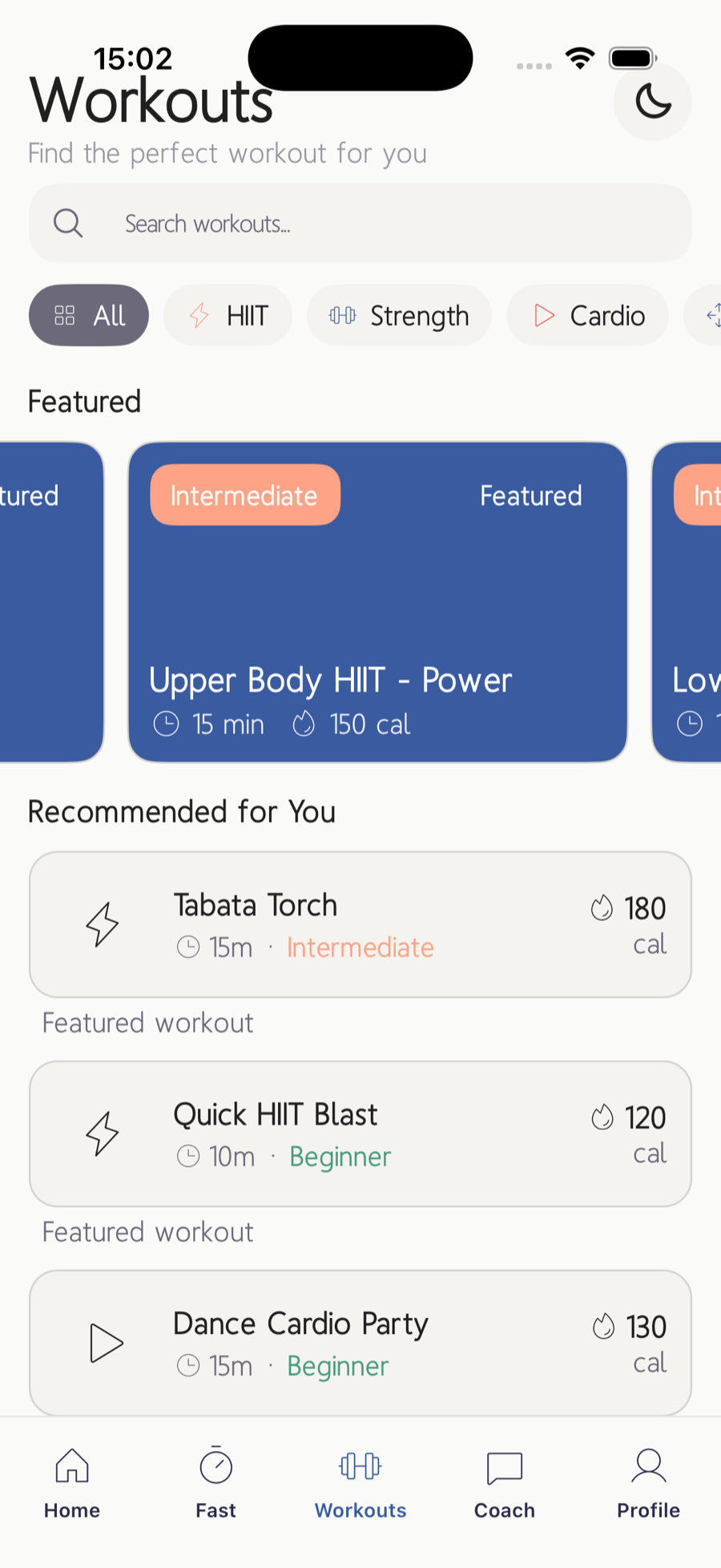
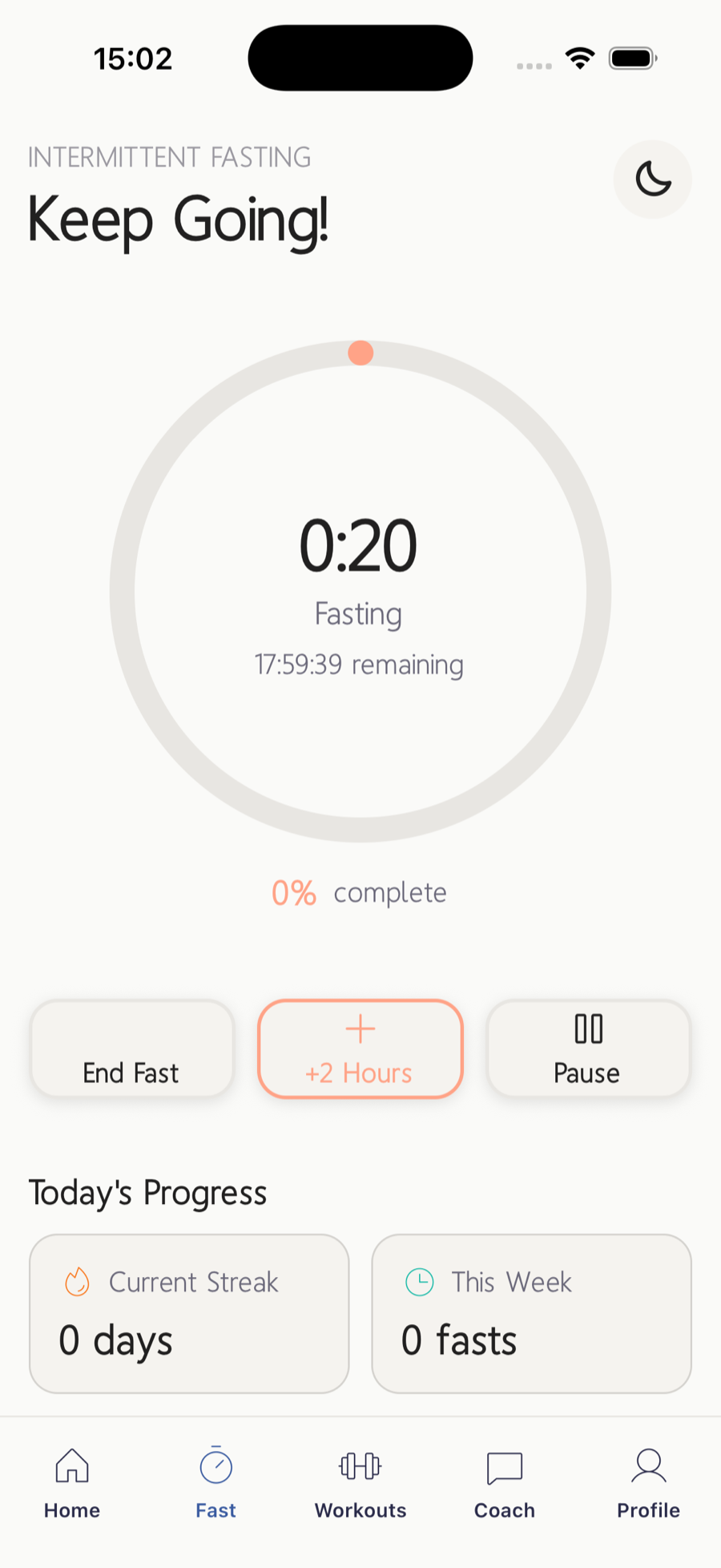
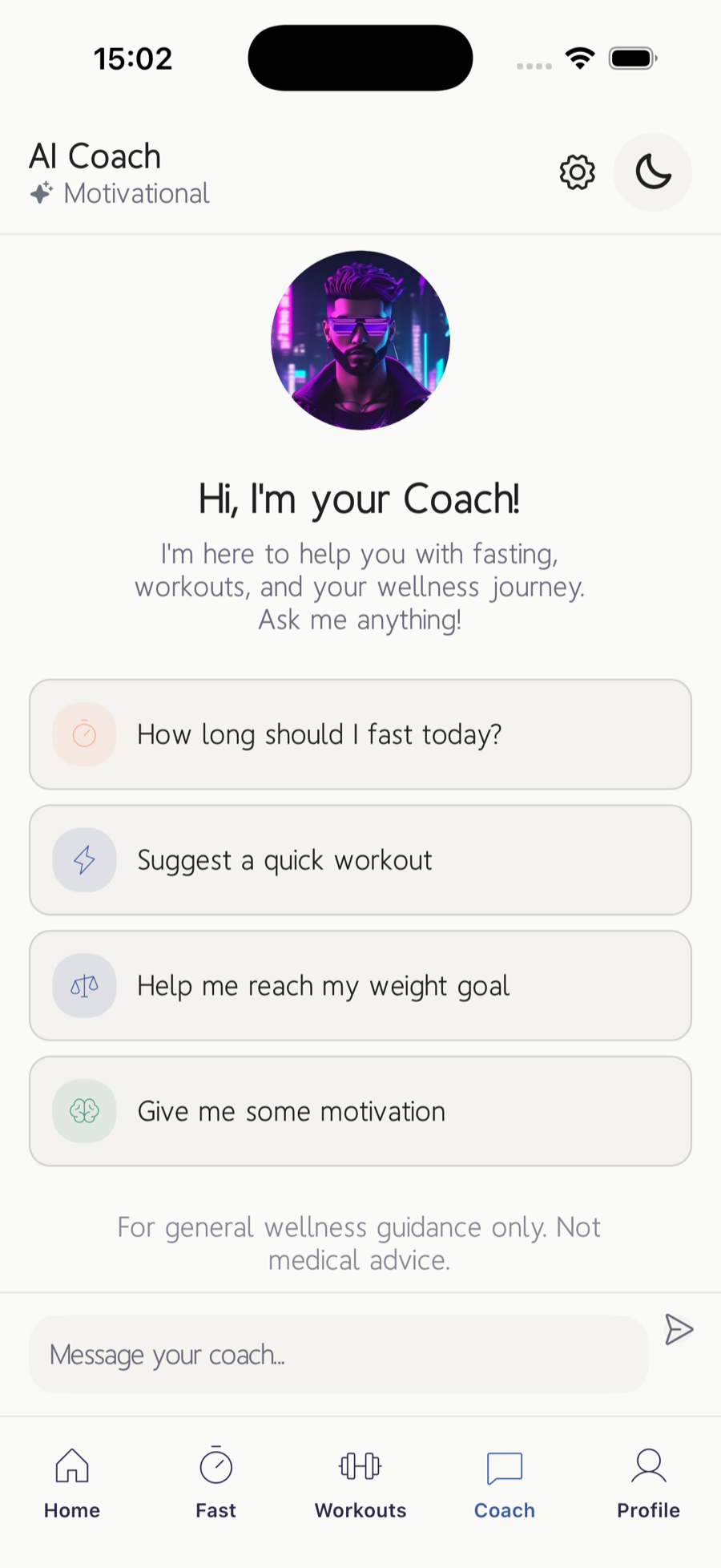
Constitutional rules order safety over evidence and evidence over enthusiasm; skills for workouts, fasting, nutrition, motivation and research load by query; memory persists across sessions; and an LLM-as-judge loop scores every answer. The interesting design surface of an AI product is the rules, not the chat.
"For general wellness guidance only. Not medical advice." sits permanently on the coach screen, and suggested prompts keep the conversation inside the coach's competence. The same rule as my transit platform: the AI advises, the human decides.
Expo and Tamagui with a tiered token system, the same primitives-beneath-a-semantic-contract structure I build on the web, so screens land consistent on iOS and Android without per-platform pixel pushing.
A tracker with no data yet has one job: make day one feel startable. The first-run dashboard leads with the next action (start a fast, log a weight, open the first workout) rather than presenting a wall of zeros as a verdict.
Apple HealthKit and Google Health Connect sync metrics automatically, because a habit app that depends on manual logging is a habit app designed to be abandoned.
Streaks, XP and achievements for the momentum-driven; friends, leaderboards and challenges for the socially driven; blood-work upload with AI-parsed biomarkers and a PubMed-backed research hub for the evidence-driven. The habit loop is visible, whichever engine drives it.
Feature-complete across fasting, workouts, the coach, social and research, with a Cardano rewards wallet in progress. Expo SDK 52 and Tamagui on the front, FastAPI and PostgreSQL behind, deployed on Fly.io. A cold LinkedIn message put it in front of a London venture investor; the walkthrough is the full story.
The hardest screen in a habit app is the one with nothing on it yet. And an AI coach earns trust the way a human one does: by remembering, by staying inside its competence, and by being the same coach on Tuesday that it was on Sunday. Both of those are design problems, and both are solved outside the chat window.